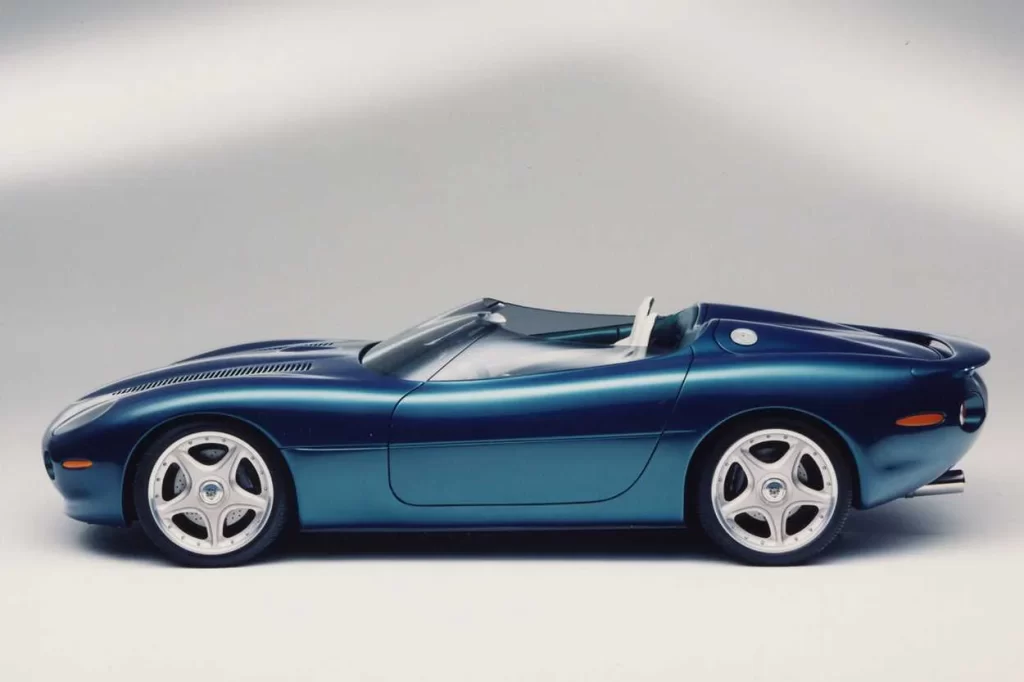
I’ve always had a bit of a soft spot for Jaguar, so when they began talking about reinventing themselves last year, I was genuinely curious to see what they had in store. Now, before I start, I want to reiterate that here on Petrolicious, our focus is predominantly on vintage and classic cars. Still, I’m going to make an exception to touch upon something more recent to provide some context and perspective.
The über-luxurious Jaguar Type-00 was unveiled at the Miami Art Week in December last year, and by now, the headlines have likely reached even the most casual enthusiast. You may have even caught a glimpse of the car in person on its global tour, having already hit Paris, Monaco, Tokyo, and most recently, Goodwood. I’m no traditionalist by any stretch of the imagination, but be it the austere typeface, the new logo, or its minimalist Bauhaus styling, nothing about it even remotely says, Jaguar.
It’s certainly sleek, yes, but it’s utterly devoid and detached from everything founder Sir William Lyons spent decades building. His vision, etched into the company’s very DNA, was delightfully simple: grace, space, and pace. So while Jaguar’s intent with this campaign was to garner attention from the world again, and they’ve certainly succeeded on that front, but at what cost? Was abandoning its core audience the right call?
I wanted to have an open mind about this rebrand, but if all this sounds a bit overdramatic, consider this: Jaguar just sold 49 cars across Europe in April. Not 4,900, not 490, forty-nine. That is a staggering collapse of 97.5 percent compared to the 1,961 vehicles during the same period the previous year.
The numbers, as sobering as they are, only reinforce the disconnect, and the damage has been done. For critics, and for those of us who have followed Jaguar through its highs and lows, it’s painfully clear that this rebranding exercise has taken away everything that the marque once represented, elegance woven into the very fabric of British aristocracy.
Now this isn’t the first time Jaguar has lost its way. The brand has navigated turbulent times before and has managed to thrive during: the aero-bodied XK post-war era and racing glory and domination at Le Mans in the 1950s, the phase under Ford ownership, and the design-led renaissance that followed under legendary designer Ian Callum.
Even at its lowest, there remained a throughline, a spirit, something that made a Jaguar, well, a Jaguar. If you are indeed a Jag owner, I’m sure you can relate to this, having to put up with the odd reliability hiccup because, frankly, it’s part of the charm, and in the more recent past, its core models have served as great alternatives to the Germans. But from a historical standpoint, cars like the E-Type in particular carried that spirit so purely that even Enzo Ferrari called it “the most beautiful car ever made.”
This time, though, it feels different. There’s no clear thread back to that spirit, and it feels like a blind leap into uncharted territory. I wonder if Jaguar is betting too heavily, too soon, on full electrification? The timing certainly isn’t right with global enthusiasm for EVs cooling.